Craft · · 4 min read
Your sketch matters more than your prompt
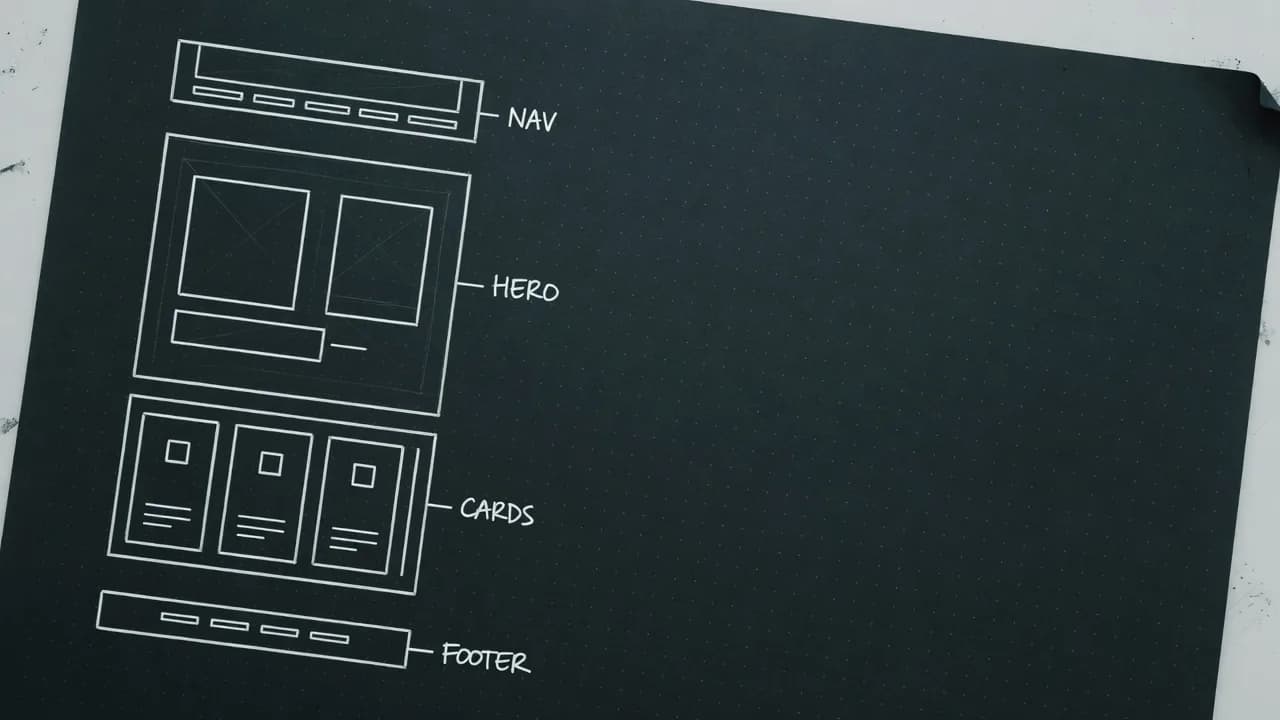
Everyone reaches for the prompt first. It is the visible knob, so it feels like the one that matters. In practice the largest single improvement we have measured came from something much duller: labelling the boxes in the sketch.
An unlabelled box is ambiguous
A wide rectangle at the top of a frame could be a navigation bar, a hero image, a banner, or a table header. A model looking at it has to guess, and it guesses from the average of everything it has seen. That average is what people mean when they say a design "looks AI generated".
Write "nav" inside that rectangle and the ambiguity disappears. Write "hero image, full bleed" and you have specified the crop as well. The sketch stops being a shape and becomes an instruction.
What to label
Regions, not pixels. You do not need to annotate every element. You need to remove the guesses that would change the layout. In our own tests the labels that paid off most were the ones naming a component type, a piece of real copy, or a constraint on size.
A frame with six words written in it consistently produces a more intentional design than the same frame with none. It costs about fifteen seconds.
The model is not the bottleneck
We ran the same sketch and the same reference through two different frontier models. The better one produced roughly twice the markup and filled in every value; the weaker one left statistics blank and picked an unrelated photograph. That is a real difference, and it is still smaller than the difference between a labelled sketch and an unlabelled one.
Fix the input first. It is free.
Keep reading
- How a labelled sketch becomes a UI
You do not prompt a layout into existence. You draw the boxes, write what they are, and the screen is generated from that.
- How to label a UI sketch so the model stops guessing
Write the component type, a piece of real copy, or a size constraint. Those three labels do more than a longer prompt.
- A mood board is how the fifth screen matches the first
A palette of eight nice colours is a mood. A palette where each colour is bound to a role is a system.